
Why Your Body Keeps Time: Understanding the Biology Behind Restful Nights
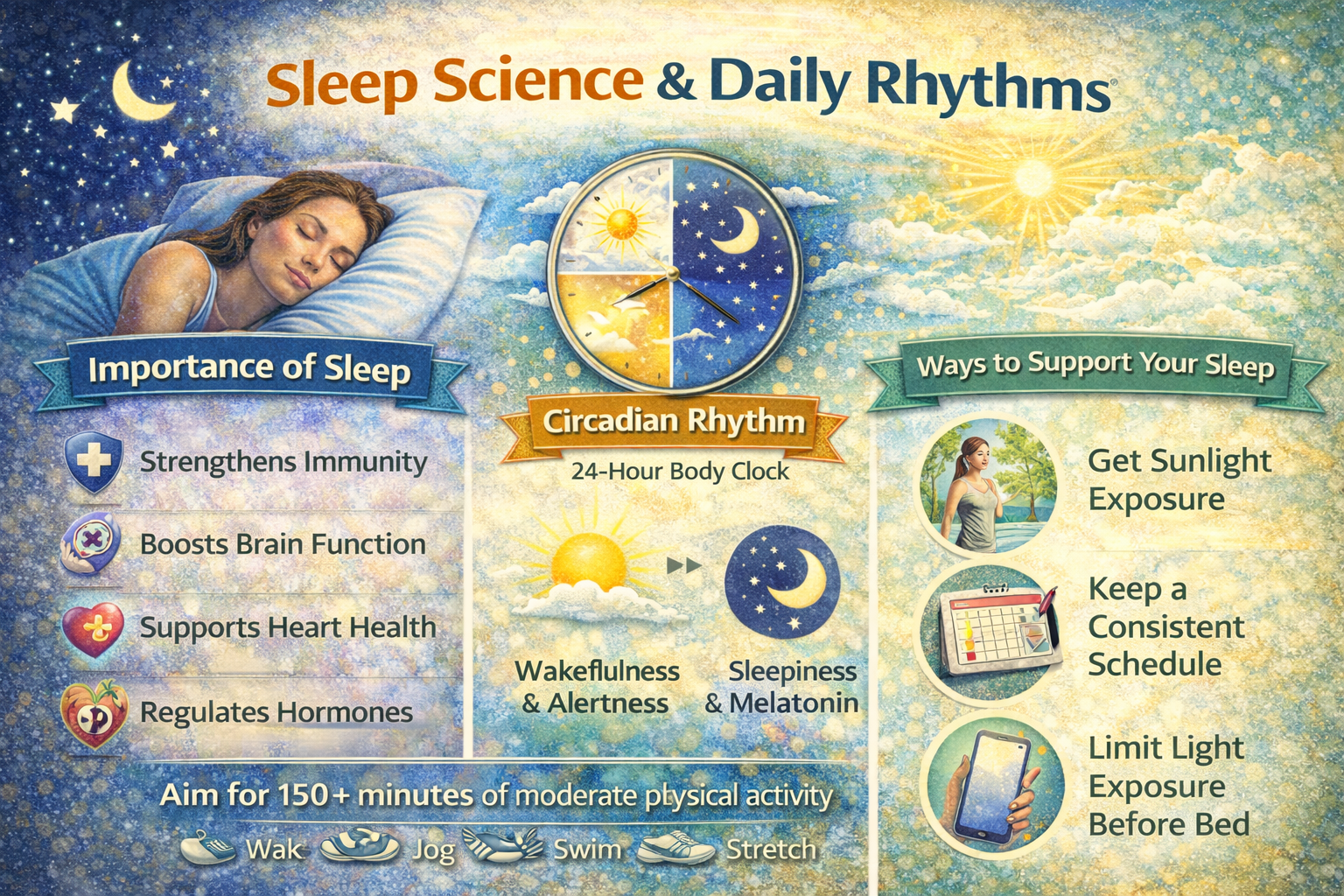
Human sleep is not random. It follows an internal timing system often referred to as the circadian rhythm — a roughly 24-hour biological cycle that regulates sleep, alertness, body temperature, and hormone release. This internal clock is strongly influenced by light exposure, daily routines, and consistent sleep schedules.
The brain contains a small structure that helps coordinate these rhythms. When light enters the eyes, signals are sent to this timing center, which helps regulate when the body feels alert and when it prepares for rest. In the evening, reduced light encourages the release of melatonin, a hormone associated with sleep readiness. In the morning, light exposure signals the body to increase alertness.
Sleep itself is organized into cycles. Throughout the night, the brain transitions between lighter stages of sleep and deeper stages. Each stage plays a role in mental processing and physical recovery. During certain phases, the brain consolidates memories and processes information gathered during the day. Other phases are associated with physical restoration and immune system support.
Disruptions to daily rhythms — such as irregular bedtimes, late-night screen exposure, or inconsistent wake times — can affect how smoothly these cycles unfold. When the internal clock is out of sync, falling asleep may take longer, and rest may feel less refreshing.
Supporting natural rhythms does not require complex interventions. Consistency is one of the most powerful tools. Going to bed and waking up at roughly the same time each day helps reinforce the body’s internal timing signals. Exposure to natural light in the morning and reduced artificial light in the evening can further support this rhythm.
Understanding sleep as a biological process rather than a passive state can change how we approach it. When daily habits align with natural rhythms, the body often responds with more stable energy levels and clearer focus during waking hours.